
The prairie vole is a well-known animal, especially in the scientific community, for its fascinating mating and monogamous behavior. Researchers have long been captivated by this small rodent, studying what makes its rare commitment to lifelong partnerships so intriguing. I fully understand that a well-educated neuroscientist might not learn much from this paper. Even I knew about prairie voles around 10 years ago… Considering that I was still a teenager with a developing prefrontal cortex, it shows that this information is widely popular—it’s not (only) that I was particularly wise back then.
Ah, the lovely prairie voles… I’ve always been very fond of them. I once had a dream where I told someone about my concerns for a rodent in distress. Not a cat or a dog, like literally everyone these days!
Today, as a devoted researcher of mating behavior, I was rereading the world-renowned research article on, well… yes, prairie voles.
Published in Nature back in 2006, when I was still a little girl playing with Barbies, Edwards and Self were researching why only a small number of animals are strictly monogamous. It’s monogamy or the highway, as they say!
https://www.nature.com/articles/nn0106-7
They found that different amounts of neurotransmitters, and thus their receptors (which go together like love and marriage), were at play.
For the curious non-neuroscientists: there’s a tiny, addictive area in our brains called the “nucleus accumbens,” which is highly associated with excitement and pleasure.
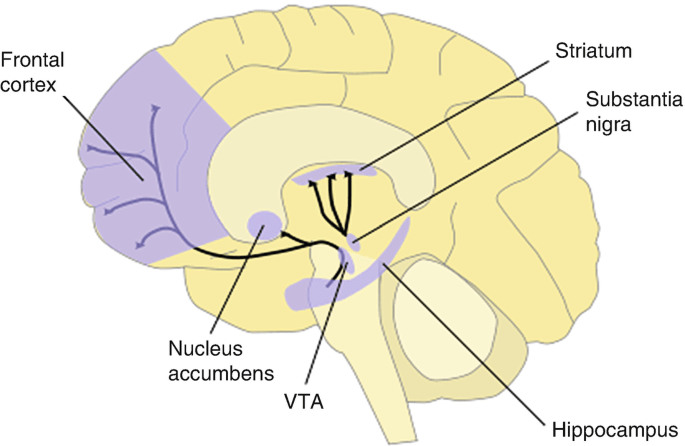
It’s the endpoint for dopamine, sent from another reward center called the VTA, and it generates motivation—motivation to pursue a partner, 🦑
find good food, 🍄
study neuroscience, 🧠
or even learn the R programming language for better statistical analysis.
Surprising as it may be, I’m spending all my motivational output from my beloved mesolimbic pathway on things that aren’t rose petals, porcini risottos, or lovers serenading from beneath my balcony. Of course, R and neuroscience are definitely worth the sacrifice of my youthful, romantic days!
But let’s get back to the real stars—those adorable prairie voles!
They should be role models for all men (and some women, though less frequently) who put a ring on someone and yet court others with a heartbeat.
From what humanity’s flaky commitment trends have taught us, trusting a man to stay loyal can be… tricky.
Meanwhile, these sweet little munchkins remain like fairy tale dreams, rarely coming true (p-value 0.000000000001 and effect size Cohen’s d being 0.000000000001).
In non-statistical terms (since I am no statistician and shall not speak like one), finding a man with the loyalty of a prairie vole is like finding a 500-carat pink diamond on the pavement—possible, but not very likely!
Male prairie voles have more D1 and D2 (dopamine) receptors in their nucleus accumbens. Specifically, they have more D1 receptors, which inhibit them from cheating—or, in more polite terms, from approaching a stranger female—once they’ve bonded to a beautiful female vole via their D2 receptors.

https://pmc.ncbi.nlm.nih.gov/articles/PMC2994774/
Long critique short:
Get your human males checked for their dopamine-related genes (DRD4, COMT, and DAT1) to learn their genetic predisposition for cheating, a.k.a. wandering off with other women while you could be raising their child.
https://www.genexdiagnostics.com/promiscuity-gene-drd4-test
And lastly, I forgot to mention: male prairie voles bond for life, which is why they are the sweetest rodents—sweeter than chipmunks and capybaras!
Long live prairie voles, for better or worse, for richer or poorer, in sickness and in health!
Neuroscientist & Neuropsychologist Pinar S.

 Gündem / Agenda