
From the archive · First published: 2024-10-02
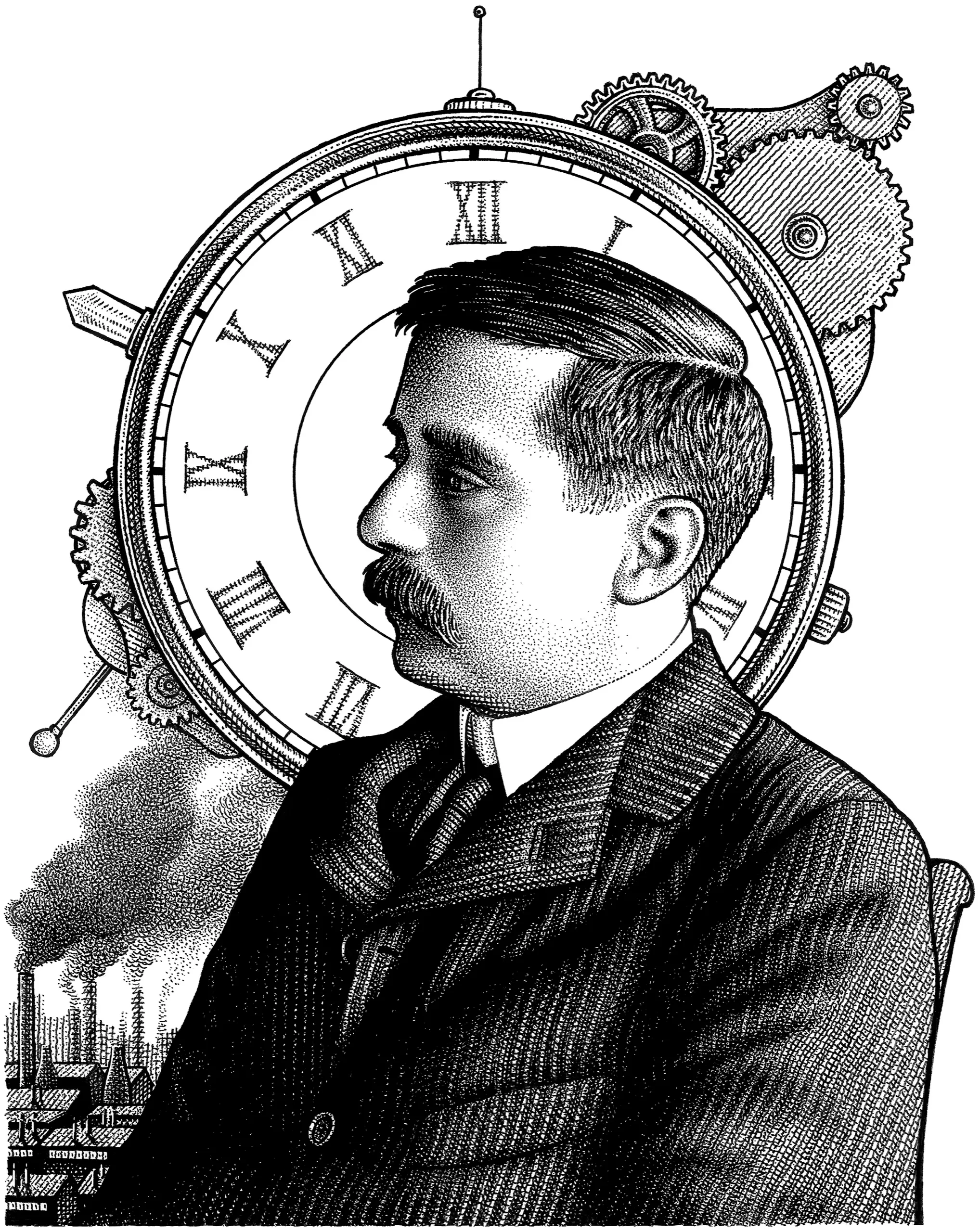
I want to discuss a story by H. G. Wells, the writer known for his science fiction who also studied biology and wrote for Nature. But before that, there is more to say than simply noting that Wells identified himself as a journalist rather than a biologist.
To my mind, there is something he does even better than fantasy and science fiction: like C. S. Lewis, he slips sudden, absurd and funny comparisons into the unreal. Laughter is more expected when reading Lewis. Wells brings out a tragicomic smile. Though we think of both through fantastic writing, neither settles for invention alone. They add sentences that make you laugh and think.
Who would not smile when, caught up in the plot, they come across a sentence like: ‘Good heavens! I have picked up the little girl instead of my handkerchief. I beg your pardon, madam; I mistook you for my handkerchief’? Perhaps it is this unexpected, utterly natural flow that also makes Lewis such a good comic writer.
Sometimes the label attached to us is not enough to define us. Nobody is only one thing. Is an architect merely an architect? They may also be an accomplished writer, actor and mother. ‘Architect’ is inadequate as their essential definition, because what defines us ought to be what gives us pleasure rather than simply what earns us money. Human beings seek pleasure, and however well we adapt to dull systems, sooner or later we return to what we enjoy.
My pen was about to wander back into neuroscience. I stop myself there, in the hope of speaking to everyone. What an impossible thing freedom is. I must block all the side roads flowing into the ring road.
Now, Wells’s The Story of the Late Mr Elvesham. The story concerns Mr Elvesham, a spirit who moves into younger bodies as he grows old, and Eden, the young man whose body he steals this time.
Eden is overwhelmed when he finds his youthful self inside an old man’s body. The passage that struck me describes the cruelty of that imprisonment: those whose minds and bodies match cannot imagine being young, full of youth’s desires and energy, then suddenly trapped in a ruined body.
As I said at the beginning, I do not really see these two writers as merely fantastic writers. Fantasy is a disguise they wear. Although the passage describes an exchange of bodies, I cannot help reading that mood as something Wells himself might have felt: a young spirit imprisoned in an ageing body. That is my reading of the story, not a claim about his private thoughts.
One way to understand this feeling is to let the body grow old while the spirit stays young. How often do we hear: ‘I am fifty, but my soul is eighteen’?
Yet there is another mismatch between spirit and body that can be felt very early: carrying an old, weary soul in a young body that must still endure every exhausting stage of joining the system to hold on to life. A soul already sated with almost all of life’s excitements and anxieties.
A footnote: I am not a fantasy writer, and my sentences are generally far from indirect. Looking for transfers and projections in them may lead you towards an accurate reading.
A writer who calls herself a writer without earning a penny from writing.
A reading suggestion: read this archive note in the context of its original date; find newer museum and exhibition notes in Art & Exhibitions.