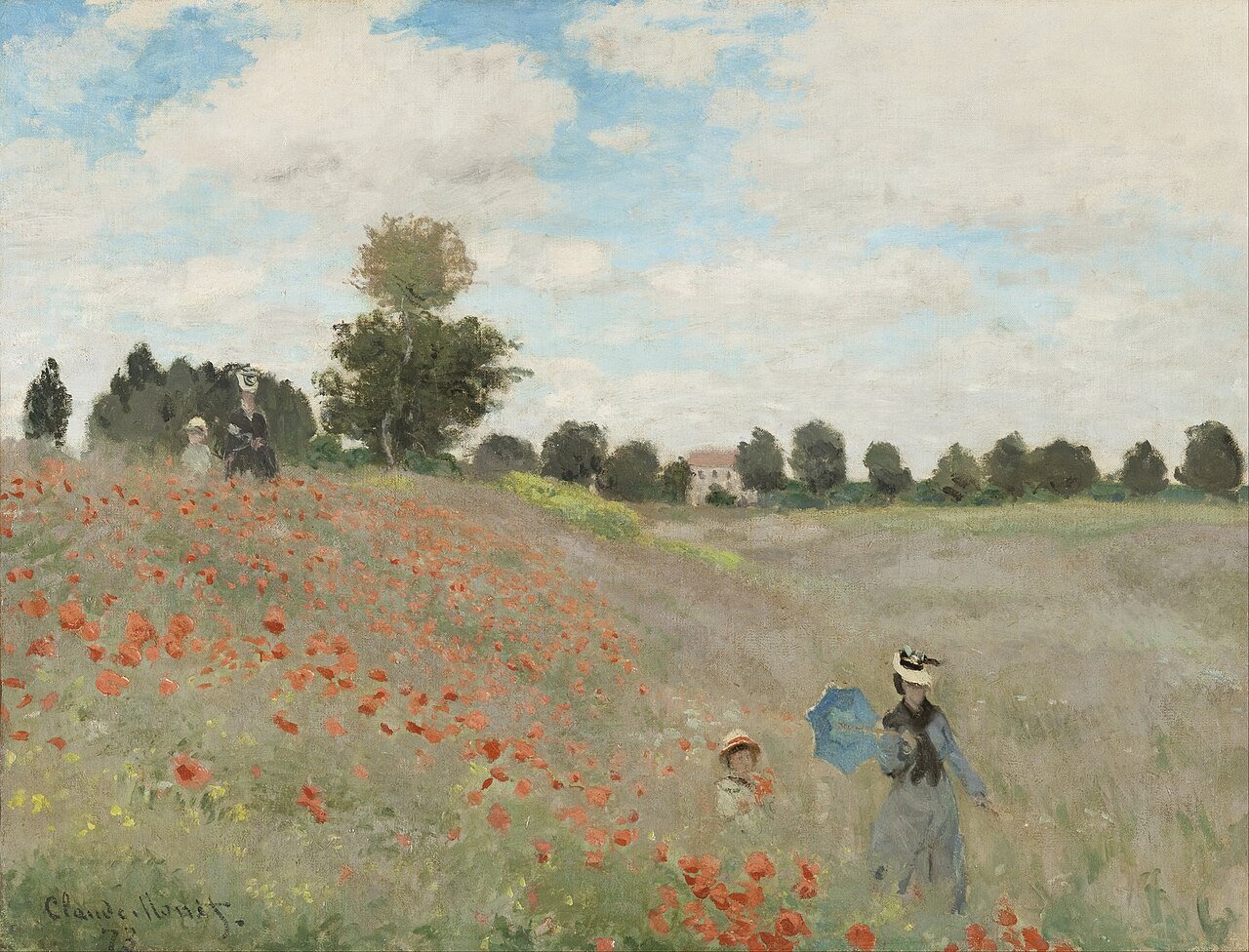


What do we notice first in a landscape: the edges of objects, or the impression left by light? Claude Monet’s Poppies, painted in 1873, makes that question tangible. Now in the Musée d’Orsay collection, it was also shown at the first Impressionist exhibition in 1874.
There is no need to force the eye to name every detail. A more useful beginning may be to follow the relationships between colours, the place of the figures in the landscape, and the change between near and far. Take in the whole painting from a distance, then move closer to a few brush marks. The picture begins to reveal how it is made.
Thinking of Impressionism only as ‘pretty landscapes’ leaves something out. What interests me here is how the visible world becomes a moment of perception. A few minutes with one painting, instead of rushing to finish a whole gallery, offers another way into the movement.
This is a short guide to a work in the Orsay collection. Before visiting, check the museum’s official page for the painting’s current display status and the programme.
Sources: Musée d’Orsay: Coquelicots