From the archive · First published: 2026-11-07
Interview by Dr Pinar Sengul
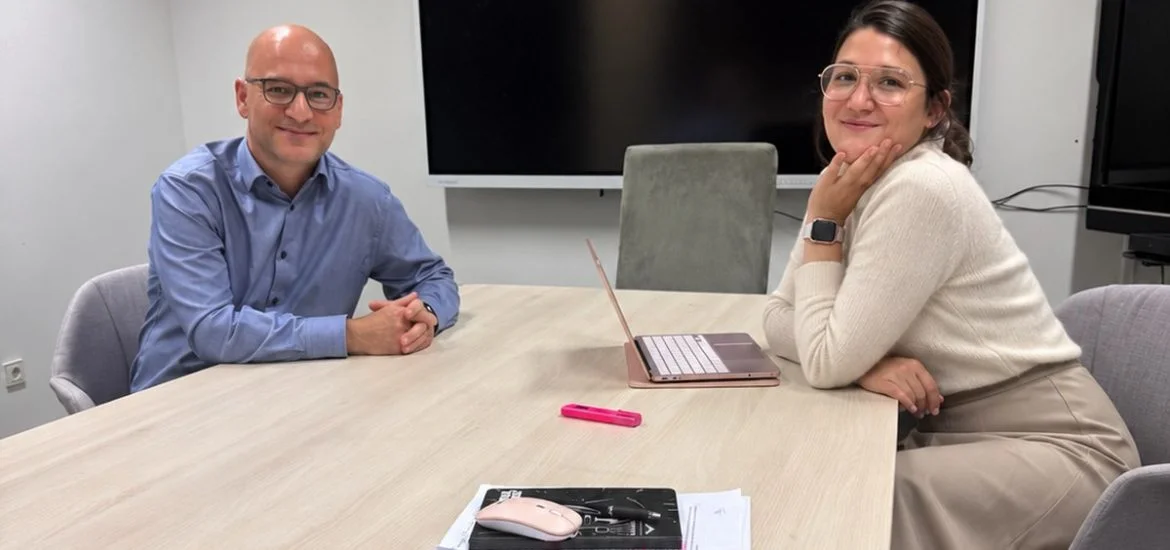
How does Alzheimer’s disease change memory, and how can families connect with someone whose ability to remember is changing? On 20 October 2026, I met Professor Emrah Düzel, Director of the Institute of Cognitive Neurology and Dementia Research at Otto von Guericke University Magdeburg, at IKND, Magdeburg University Hospital. Our conversation explored memory circuits, physical activity, genetic risk and the everyday challenges facing people with dementia and their families.
Publication note: This conversation also informed my opinion article, “Putting everyday life at the centre of Alzheimer’s research”, published in The European Scientist. Below is an edited Q&A from the same interview. The conversation was conducted in English; questions and answers have been edited and condensed for clarity while preserving their meaning.

Pinar Sengul: What is your team in Magdeburg trying to understand about memory?
Emrah Düzel: We are trying to understand the circuit mechanisms of memory in the brain. Memory is complex: there are different forms of it, and many brain areas have to work together to support them.
We want to know which regions work together and how. We describe them as circuits because information comes in, is processed and produces an output. Understanding these circuits helps us examine, at a mechanistic level, how Alzheimer’s disease affects memory and how those changes influence everyday life.
Pinar Sengul: What does this approach reveal about the memory difficulties people experience?
Emrah Düzel: One important aspect is the nature of episodic memory: the memory of personal events in everyday life. Unlike learning facts through repetition, a personal experience may happen only once. The brain therefore needs a system that can form a memory after a single experience. This is among the functions affected early in Alzheimer’s disease.
The changes are a little like the erosion of a landscape. Imagine mountains, trees and lakes. Some trees disappear first, others later, while a mountain may remain for much longer. Everything does not fade at once. People lose different bits and pieces of the memory landscape.
Understanding that pattern is an important part of our work. It helps us look more closely at the kinds of memory impairment people actually experience.
Pinar Sengul: Is Alzheimer’s disease inevitable with age, and how does genetics affect the risk?
Emrah Düzel: Ageing is the strongest risk factor, and we do not fully understand why. Certain genetic variants can also increase the likelihood of developing Alzheimer’s disease considerably.
One important example is APOE ε4, a variant associated with cholesterol metabolism and the accumulation of amyloid plaques in the brain. Having two copies is associated with a substantially greater risk than having one. But risk also rises with age in people who do not carry ε4. It is certainly not the case that everybody develops Alzheimer’s disease.
Pinar Sengul: The 2024 Lancet Commission estimated that addressing 14 modifiable risk factors could prevent or delay nearly 45 per cent of dementia cases. How should readers interpret that figure?
Emrah Düzel: It concerns the population as a whole, rather than an individual person’s risk. It points to the importance of addressing modifiable risk factors across the population.
Physical inactivity belongs in this picture. A sedentary lifestyle also tends to occur alongside other risks, such as obesity, poor nutrition and cardiovascular problems. These factors can co-vary. Hearing and vision problems also deserve attention.
Pinar Sengul: Your 2016 review in Brain explored exercise and memory. What makes physical activity particularly interesting?
Emrah Düzel: Exercise has a relationship with those wider risk factors, but it also acts on the brain’s memory systems. There is an evolutionary logic to this: when you move, you change location, and the brain expects new information. Movement itself is a signal to the memory system.
There is also a cardiovascular component. During more vigorous exercise, muscles and the cardiovascular system release neurotrophic factors that can influence the brain. These processes can support neural and vascular plasticity, the capacity of the nervous system and its blood supply to adapt.
Pinar Sengul: Can lifestyle changes still matter for someone who carries APOE ε4?
Emrah Düzel: Yes. Lifestyle modification is also effective for people who carry this risk variant.
APOE status also matters when we consider the newer amyloid antibody therapies. We need to establish a patient’s APOE status as part of that assessment.
Pinar Sengul: Is there one lifestyle factor people should prioritise?
Emrah Düzel: There are two ways to approach that question. One is to ask whether a single factor is so important mechanistically that changing it alone can alter the course of the disease. That is difficult to pinpoint.
The other consideration is individual. Many risk factors are linked, so it can be useful to identify the change that makes other changes possible. For one person, that may mean overcoming social isolation. For another, becoming more physically active may help them address several difficulties.
It is very hard to change everything at once. People need to find what helps them unlock their own capacity to change the wider pattern of their risk factors.
Pinar Sengul: Could projects such as the Mittel-Elbe platform and PrecisePrevent help identify which changes matter most?
Emrah Düzel: This is a collective effort across the field. We are contributing important pieces of the puzzle, and we have to work together.
These projects are discovery science. They allow us to identify promising leads that then need to be tested in larger, multicentre studies.
Pinar Sengul: What would you say to families and friends caring for someone with Alzheimer’s disease or another form of dementia?
Emrah Düzel: Caring for someone with dementia is very hard. It is a huge challenge for families, effectively a 24-hour job, and it can change their lives.
It is important to seek early advice from people who specialise in care, and to find a medical professional who understands the disease and can provide good support.
But carers must also try not to neglect themselves. Their own physical and psychological health needs attention. I know that is challenging, but my message is: do not forget yourself.
Pinar Sengul: I care deeply about older people, perhaps because of my grandmother, whom I loved very much. After losing her, I promised myself I would work on Alzheimer’s disease and help communicate to the public why we need to care more for older people.
I once played backgammon with a man of around 90 who had Alzheimer’s disease. He struggled to describe recent events, yet he could still beat me and call out the numbers on the dice in Persian, as he had done for years. His relatives were surprised.
These are people who have given us so much, and I feel we have a responsibility to give something back. What can we do to make life easier for them, and what can experiences like this teach us about supporting someone with dementia?
Emrah Düzel: You have already explained a great deal through that example. It is very important to help people feel comfortable, and there are keys to doing that. These are islands of preserved ability.
The key may be a piece of music, a song or a particular memory. If you can find it for that person, the experience can be rewarding for both them and their family. It can create a moment of relaxation and perhaps even happiness.
My suggestion: when caring for a relative, make time to notice the music, game or routine they still enjoy. Seek specialist care advice early, and include the carer’s own needs in the plan.