From the archive · First published: 2025-02-25
The meat, milk and eggs on supermarket shelves can make the animals behind them disappear from view. For me, the ethical question begins when we put those animals back into the picture: whose interests have been overlooked so that this product can reach our table? As a neuroscientist interested in philosophy, and as a vegan, I want us to take that question seriously.
Animal ethics is not only about whether we like animals. It asks what we owe them, including animals whose lives we never see. Human convenience cannot be the only measure. To explore this, I turn to our relationship with nature, Peter Singer’s argument about interests, Joel Feinberg’s account of rights and the Jain principle of ahimsa.
Humans and nature: dependence does not disappear
Human communities have always depended on their environments for food, shelter and materials. Agriculture, industrialisation and urbanisation changed the scale and methods through which we altered those environments. This is not a simple story of an innocent past followed by a destructive present: hunter-gatherer societies were diverse, and no whole way of life should automatically be described as living in perfect harmony with nature.
Industrial production, habitat destruction and pollution have nevertheless made the consequences of human activity impossible to ignore. A figure often quoted from WWF’s 2022 Living Planet Report needs particular care: its 69% decline concerns the average relative abundance of monitored vertebrate wildlife populations between 1970 and 2018. It does not mean that 69% of all biodiversity, species or individual animals vanished. The distinction matters, even when the underlying message is deeply worrying.
Different understandings of human nature shape different relationships with other species. Religious and cultural traditions, economic pressures, personal experience and access to resources all influence what people consider acceptable. A pigeon in a city, a dog living with a family and a farmed animal are often treated as if their moral worth changed with the role humans assigned them.
Anthropocentrism places humans at the centre of moral concern. It does not have only one form, but it can leave non-human life valued mainly for its usefulness to us. Deep ecology challenges this narrowness by emphasising the value and interdependence of life. Ecofeminist approaches examine connections between different forms of domination, while the biophilia hypothesis proposes a human affinity with other living things. These are distinct perspectives, rather than interchangeable scientific conclusions.
The Achuar and other Indigenous peoples also invite us to question the assumption that Western distinctions between humanity and nature are universal. Their traditions should not be collapsed into one romantic image of ecological perfection. What interests me is the possibility of a relationship based on responsibilities and connections, rather than ownership alone.
Our long relationships with dogs offer another reminder that interaction between species need not consist only of exploitation. Hunting, protection and companionship have involved cooperation as well as human control. That history does not excuse the suffering imposed on other animals; it makes our selective concern more striking.
Environmental ethics and animal ethics overlap, but their questions are not identical. Protecting a habitat or a species does not automatically protect every individual animal within it. Conversely, concern for an individual’s suffering cannot replace attention to ecosystems. Industrial farming, experimentation and habitat destruction require us to consider both levels. For me, recognising that humans are part of nature also means accepting limits on what we may do to others.
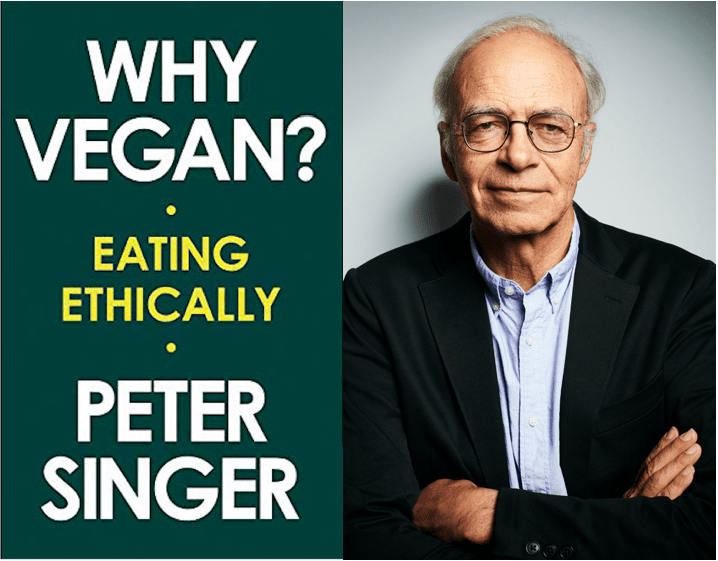
Peter Singer: whose interests count?
Singer’s Animal Liberation helped put the interests of non-human animals at the centre of public ethical debate. His argument asks us to give comparable interests equal consideration across species, rather than dismiss suffering because the being experiencing it is not human. Equal consideration does not require identical treatment: different animals have different needs.
This challenge to speciesism matters to me because a familiar habit can appear morally neutral simply through repetition. The fact that a practice is normal, profitable or pleasurable does not settle whether it is justified. Singer’s utilitarian approach should also be distinguished from rights-based theories; they can support similar practical objections without relying on the same reasoning.

Rights, interests and the risk of misreading a philosopher
Tom Regan’s rights-based account and Joel Feinberg’s interest principle offer different ways of thinking about moral standing. For Feinberg, the capacity to have interests is central to being the kind of entity that can hold rights. His 1974 essay does not argue that a tree has interests merely because it needs water. He distinguishes biological needs from the interests associated with a mental life. Disagreeing with that boundary is possible; attributing the opposite position to him is not.
As a neuroscientist, I find the evidence concerning animal experience morally significant. The strength and nature of that evidence vary across species. The 2024 New York Declaration on Animal Consciousness identifies strong support for conscious experience in mammals and birds, and a realistic possibility in all vertebrates and many invertebrates. Uncertainty is a reason for careful consideration, not an automatic licence to disregard possible suffering.
My ethical position is that animals should not be reduced to instruments for human purposes. Avoiding pain, having opportunities for species-appropriate behaviour and living without unnecessary coercion matter even when an animal cannot explain those interests in our language.
Ahimsa and my own vegan choices
The Jain principle of ahimsa, or non-violence, encourages attention to harm in action, speech and thought. I find that commitment deeply valuable. Jain traditions should not simply be labelled vegan: vegetarian practice and the use of dairy have their own histories within them. My veganism is my own ethical response to the wider question of how to reduce harm, not a claim that all Jains make the same choices.
Plants are alive. That is not the same claim as feeling pain.
“Plants are alive too” is biologically correct. Plants grow, respond to their environments and communicate through complex processes. What has not been established is that these responses amount to a subjective experience of pain. They do not possess animal nervous systems; sensitivity to a stimulus alone is not evidence of sentience. Taiz and colleagues’ 2019 review argues against interpreting plant behaviour as consciousness. Scientific uncertainty should be described accurately, without pretending that a philosophical question has been settled by a single paper.
Respect for plants, habitats and ecological relationships therefore remains essential. It does not erase the evidence of suffering in animals or make every form of consuming living organisms ethically equivalent. Asking where we can avoid harm is more useful than using the existence of plants to end the conversation.

What follows at the table?
For me, vegan choices, refusal to support exploitative entertainment, scrutiny of animal experimentation and support for credible animal-protection work belong to the same ethical commitment. Someone may begin with food; another person may begin with responsible care or a change in purchasing habits. The point is to connect sympathy with consistent action.
Animals do not become valuable only when they are useful, beautiful or close to us. A society that takes their interests seriously must be willing to question its ordinary habits, including the ones served on a plate.
Sources: WWF, Living Planet Report 2022 · Feinberg, The Rights of Animals and Unborn Generations (1974) · New York Declaration on Animal Consciousness (2024) · Taiz et al. (2019) · Jainpedia: Ahimsa
My suggestion: Look through a week of shopping and identify plant-based alternatives you can realistically use. Turning an ethical intention into an ordinary, repeatable habit is a useful beginning.